Exploring How Registration Timing Shapes Access to Shifting In-Match Odds Across Soccer, Hoops, and Racket Sports on Portable Devices
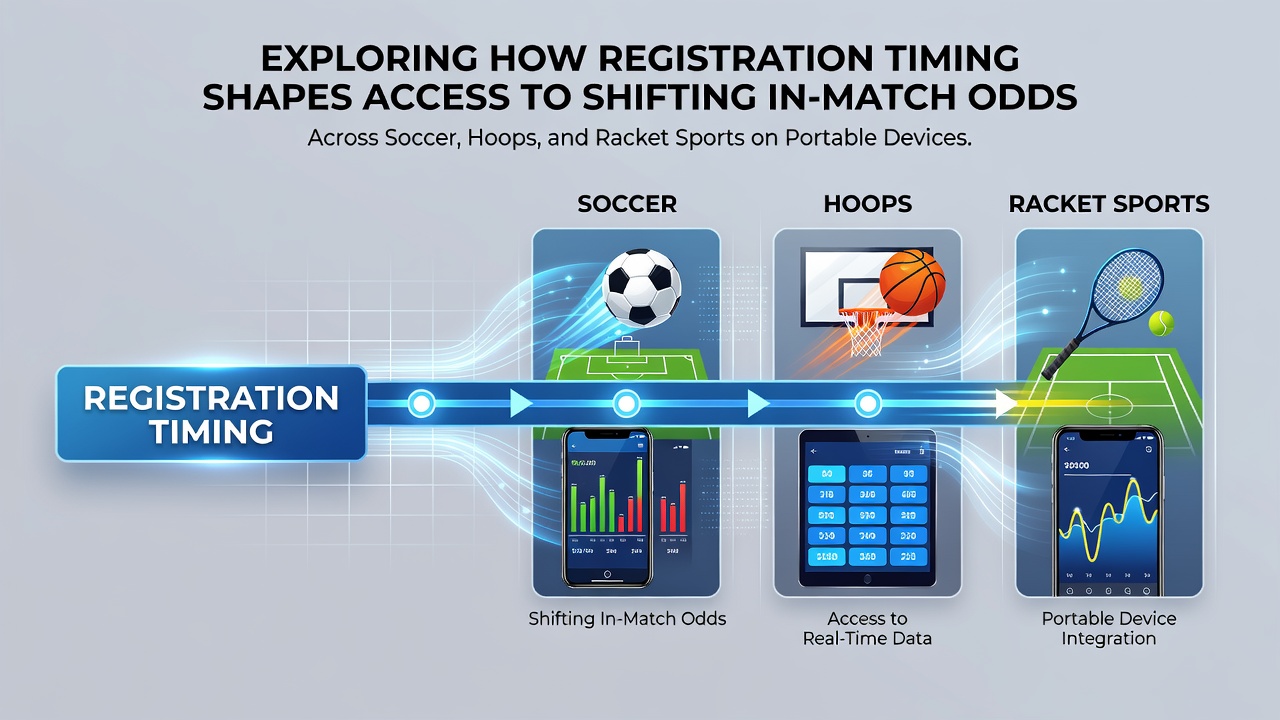
Registration timing directly influences when bettors gain entry to live odds that fluctuate with every goal, basket, or point scored in soccer, basketball, and racket sports. Account creation, identity verification, adn initial deposits must complete before platforms unlock real-time markets on smartphones and tablets. Delays at any stage restrict participation once matches begin and odds start moving.
Core Mechanics of Mobile Registration and Live Access
Operators require several sequential steps before users access in-match wagering. These include downloading the app, entering personal details, confirming identity through documents or biometrics, and funding the account. Each phase consumes time that overlaps with ongoing events. Data from regulatory filings shows verification often takes minutes to hours depending on the jurisdiction and method chosen. Bettors who start registration during pre-match periods frequently complete setup before kickoff or tip-off while those who begin later encounter restrictions until approval finishes.
Portable devices add another layer because network connectivity, app store approvals, and operating system permissions affect speed. Users on cellular networks sometimes face slower uploads of verification materials compared to Wi-Fi connections. Once approved, the interface presents dynamic odds that update continuously based on match developments in soccer leagues, NBA games, or ATP tournaments.
Soccer Match Registration Patterns
Soccer matches run ninety minutes plus stoppage time, creating extended windows where odds shift after each scoring opportunity or substitution. Registration that finishes within the first fifteen minutes allows access to early in-play markets on goal scorers or total goals. Observers note that accounts pending verification during the opening half often miss the initial volatility that follows the first goal. Platforms typically freeze new registrations from placing live bets until full compliance clears, which aligns with rules enforced by bodies such as the New Jersey Division of Gaming Enforcement.
Case examples from major European and South American fixtures demonstrate how timing clusters around kickoff. Bettors who register the day before gain immediate entry once the match starts while same-day signups compete with peak verification queues. This produces measurable differences in available markets across the same event.
Basketball and Rapid Odds Movement
Basketball quarters last twelve minutes in professional leagues, generating frequent scoring bursts that trigger rapid odds adjustments on portable screens. Registration completed before the opening tip provides full visibility into quarter-by-quarter props and player performance markets. When sign-up stretches into the second quarter, users encounter locked sections until the process ends. Research from industry reports indicates that basketball apps process higher volumes of simultaneous verifications during nationally televised games, extending average wait times.
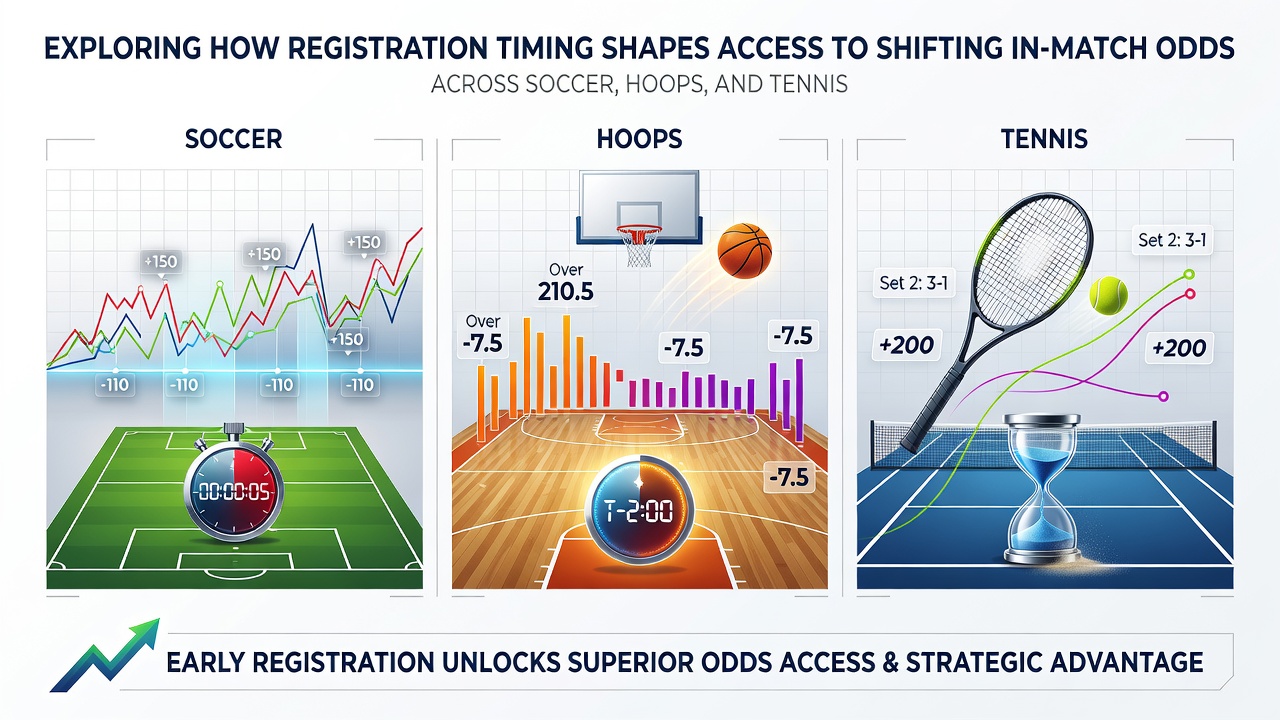
Those who finalize accounts between quarters sometimes regain access for the second half yet lose earlier segments entirely. The compressed game length compared with soccer amplifies the effect of even brief delays.
Racket Sports and Set-by-Set Fluctuations
Tennis and similar racket sports feature variable match lengths that depend on sets and tiebreaks, producing odds that evolve across multiple hours. Registration timing here interacts with the structure of best-of-three or best-of-five formats. Accounts activated during the first set capture live markets on next-game winners and total points while later activations restrict users to remaining sets only. Figures from the Australian Communications and Media Authority reveal rising mobile participation in tennis betting during grand slam events, where verification speed determines how many sets remain accessible.
Players who begin registration between sets encounter shorter queues than those attempting it mid-rally sequences. This pattern repeats across clay, grass, and hard-court surfaces where environmental factors also influence match duration and odds volatility.
Platform Differences and June 2026 Trends
App stores and direct downloads present distinct timelines for initial setup. Some operators integrate instant verification through government databases while others rely on manual review. In June 2026, several jurisdictions reported incremental improvements in automated checks that shortened average approval from twelve minutes to under five for returning users. New registrants still faced additional scrutiny that extended the window before live odds appeared on device screens.
Cross-sport comparisons highlight consistent principles: earlier completion expands the number of shifting markets visible during any single event. Soccer offers the longest continuous period for adjustments while basketball compresses changes into brief windows and racket sports distribute them across variable durations.
Conclusion
Registration timing functions as a gatekeeper that determines the breadth of in-match opportunities available across soccer, basketball, and racket sports on mobile devices. Sequential requirements for verification and funding create predictable access gaps once events commence. Data from multiple regulatory sources confirms that completion before match start maximizes exposure to evolving odds while delays narrow participation to later stages only. These mechanics remain consistent regardless of sport or device type.